Wholesale

One short list. A whole tea menu.

Two or three single-farm teas that carry a full menu — cold, hot, no-alcohol, spiked, even a dessert — trained into your team and turned with the seasons. The same cellar we pour every day on Kopenhagener Straße.

Start here
Start with a tasting.
At the bar, before or after your service — half an hour for the café line, about an hour for the Reserve. We pour the teas that fit your room and leave the per-serving math on the table. You decide.
Book a tasting → or join the list for the next opening — we take on a few accounts a year.
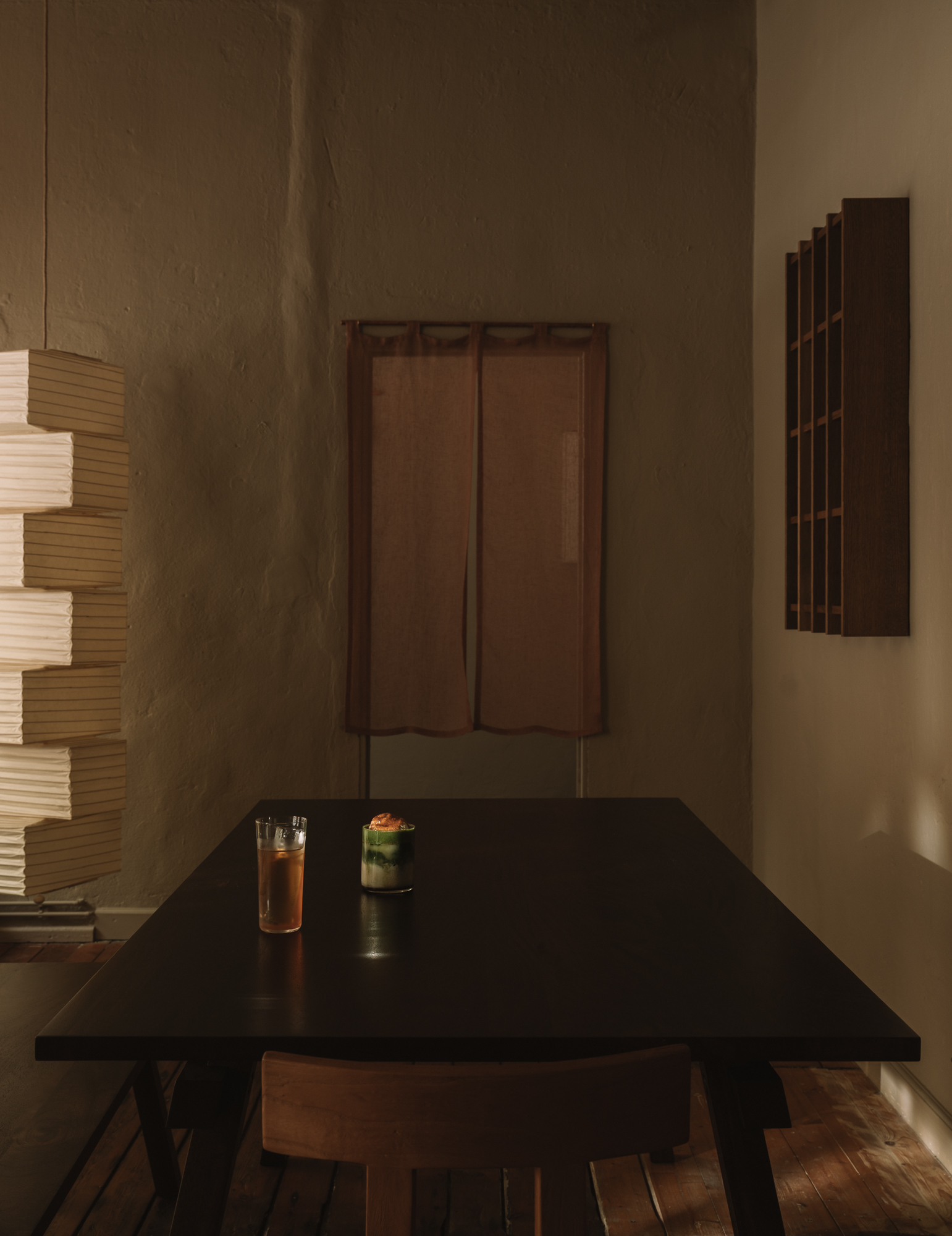
Two pours on the table — cold brew and matcha, Kissabō, Berlin
Who’s pouring

The bar is the proof.

kissabō is a sixteen-seat tea bar in Prenzlauer Berg — poured from single farms in Wazuka, Uji, Shizuoka and Miyazaki, harvests dated to the year, sweets made in-house each morning and gone most afternoons.

You’ll deal with Marcin — the person who selects the tea in Japan, pours it at the bar, and trains your team himself. One relationship, not a sales layer.

The matcha selection is co-curated with Yuki Okamoto, tenth-generation grand tea master from Kyoto — every matcha in the cellar passed his cup first.

Featured by Ignant · Berliner Zeitung · Cee Cee · tip Berlin

On your menu

A small buy, a full menu.

The list stays short so your order stays easy — and every tea earns its keep more than once.

0,38 €
of tea in the latte

Barista Matcha doses at 4 g — thirty-eight cents of tea in the drink you sell for many times that. The full per-serving sheet is on the table at the tasting.

15 g
the litre, cold

Cold brew where a pot takes 10–12 g a serving — more cups per pack, sweeter, low in bitterness, always ready in the fridge.

×2
the leaves live twice

Spent cold-brew leaves become furikake, or fold into a salad — a savoury second life, nothing binned. A kitchen’s kind of ingredient.

0 %
a drink, no alcohol

For the table that isn’t drinking — with the craft of everything else on the pass, and an easy base to spike behind the bar.

Portfolio

Two lines, one cellar.

飲み比べ
Premium — Reserve

Single farm, single cultivar. First-harvest and competition grade, vintage-dated. Sold by intent, served by the cup or the flight — allocation is limited; the story is the product.

Nakai Matchafirst harvest · Wazuka, Kyoto — usucha & koicha
Okumidori Matchasingle cultivar · Wazuka — usucha by the bowl
Samidori Matchahandpicked · organic · Uji — fine, sweet, smooth
Saemidori Gyokurocompetition grade · Shizuoka — deep umami
Goko Gyokurohandpicked · Shizuoka — powerful, oceanic
Minami SayakaJapanese oolong · Miyazaki — after-dinner, dessert
For omakase · fine dining · tasting-led rooms
茶房
Café — the working line

Milk-stable, consistent, latte- and volume-grade. Built to survive a Saturday rush, hot or on ice. Stocked in Berlin and forecast with your counter — a standing account never runs dry.

Barista MatchaNakai · Wazuka — milk-stable lattes; holds in the kitchen — baking, purin, ice cream
Yabukita Matchasingle cultivar · clean & grassy — the everyday latte
HōjichaUji — roasted, toasty, no bitterness
Hōjicha PowderNakai · Wazuka — milled fine, the hōjicha latte straight from the tin
GenmaichaUji — nutty, warm, the broad-appeal pot
For cafés · roasters · hotel floors
Who it’s for

Four rooms in Berlin.

Specialty cafés & roasters

A matcha that won’t split, a hōjicha latte straight from the tin, a cold brew that’s always ready in the fridge.

Café line
Fine dining, bars & omakase

Tea as a course or a cocktail — gyokuro service, a matcha flight, a signature pour your bar finishes.

Reserve · café line
Hotels & design spaces

A beautiful tea offer that matches the room, no barista needed — trained into the team you already have.

Both lines
Specialty retail & delis

Tins — a numbered, design-led range that sells off the shelf.

The K·NN range
How we work

What you get, what we ask.

What you get

  • The menu, made together — a short seasonal list shaped for your counter, turned four times a year. The autumn list arrives before you need it.
  • Supply that holds — the working line is stocked in Berlin and forecast with you; the roster is sized to the cellar, so a standing account never hears “out of stock.”
  • On-site staff training — method, dose, storage; from the bakery bar to the events floor.
  • The brand kit — labels, menu wording, provenance cards.
  • Reserve batches held per partner — the scarce harvests, for tasting-led rooms, poured by no competitor nearby.

What we ask

  • Store it right — matcha cold, sealed, rotated.
  • Name the origin — farm, cultivar, year on the menu.
  • Pour it the way it was trained.
  • Charge for it like it matters.

Prepaid first order, then net-14. Small minimums. The Reserve line is never sold on consignment.

The list

We take on a few new accounts a year — one or two at a time.

The teas are allocated to us once a year, and our own bar pours first — so the roster is short on purpose: a standing account is never oversold. Supply is reserved ahead, season by season.

When a place opens, the list hears before anyone else. An introduction from a room we already supply carries weight.

In a hurry? Don’t wait for the season — book the tasting →

We read everything, and we answer when a place opens.

喫茶房

Come for half an hour. We pour, you decide.

Kopenhagener Str. 16, Berlin · marcin@kissabo.com